
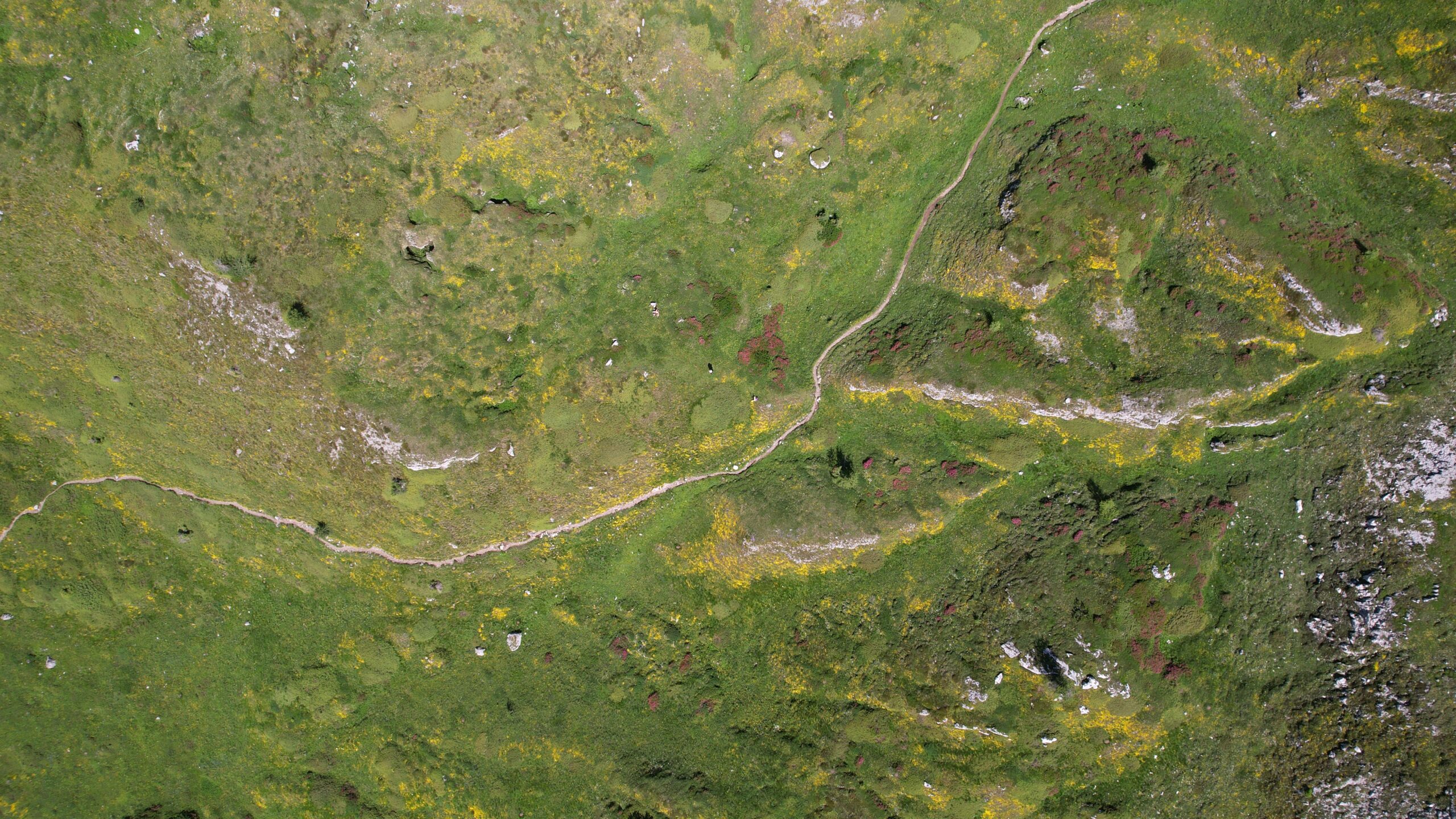
Trails as Strategic European Infrastructure
The maintenance of trails should be given the same level of priority as roads and bicycle paths. Trails are critical public infrastructure that support health, nature, mobility, and regional development across Europe.
Unequal Funding and Political Invisibility
The European Cyclists Federation (ECF) has successfully advocated for increased EU-level funding for cycling infrastructure, resulting in a substantial expansion of cycle paths across Europe. In contrast, trails for other outdoor activities beyond cycling remain largely politically invisible and systematically underfunded.
Responsibility for trail management is fragmented across NGOs, municipalities, protected areas, and volunteer organizations. Despite their widespread use and societal value, there is no strategic EU-level framework addressing trail maintenance, restoration, or long-term resilience.
European Trails Policy Paper
Proven Benefits of Trails
Well-maintained trail networks deliver measurable value across multiple European policy priorities, including:
- Public health and well-being
- Nature conservation and ecosystem restoration
Sustainable and climate-neutral mobility - Tourism and local economies
- Rural and regional development
- Social cohesion and inclusion
Yet these benefits are not reflected in current funding structures or policy recognition.
European Trails Policy Paper
A Joint European Advocacy Effort
Together with leading European outdoor organizations – including ENOS, EUROPARC, ERA, and IMBA Europe – European Trails advocates for:
- The integration of trail management and restoration into existing EU funding instruments
- Additional, targeted funding dedicated to the long-term maintenance and climate adaptation of existing trails
This collective effort aims to secure stable, professional, and future-proof trail infrastructure across Europe.
The Policy Paper in a nutshell
€10–20
Return on Investment
83.7%
A More Urban Europe
12
12 Recommendations
4
Four Levels, One System
European Union Level
Recommendations for EU institutions and the co-legislators:
- Establish an EU Trails Framework — a shared policy reference for how trails are planned, funded, and maintained across Member States.
- Secure dedicated EU funding for trail infrastructure and maintenance, rather than relying on incidental support from unrelated programmes.
- Respect, recognise, and create trail corridors within the TEN-T (Trans-European Transport Network).
- Harmonise trail standards so waymarking, safety, and accessibility are consistent for people crossing borders.
- Improve evidence and data on trail use and impact, including through Eurobarometer surveys.
- Integrate trails into green corridor policy, connecting trail networks with biodiversity and nature-restoration goals.
National Level
Recommendations for national governments:
- Prioritise trail infrastructure in national transport and tourism planning, recognising trails as valuable public infrastructure in their own right.
- Promote responsible access and outdoor education, helping citizens use and care for trail networks safely and sustainably.
Local and Regional Level
Recommendations for local and regional authorities:
- Establish local trail forums, bringing together landowners, municipalities, businesses, and volunteers to coordinate trail management.
- Support volunteer systems that maintain and steward trails, recognising the essential role volunteers play in keeping networks open and safe.
- Leverage trails for local economic development, connecting trail tourism with local hospitality, retail, and community initiatives.
Digital Governance
Recommendations for digital and data governance:
- Develop a European approach to trail data, working towards a shared “digital twin” of Europe’s trail networks that keeps route information accurate, open, and usable across borders.
European Trails Policy Paper
Towards a European Trails Policy
The development of the European Trails Policy Paper – Trails as Strategic European Infrastructure is led by the European Network of Outdoor Sports (ENOS).
The policy paper calls for the formal recognition of trails as essential public infrastructure and outlines concrete, feasible actions for:
- The European Union
- EU Member States
- Regional and local authorities
Its objective is to establish a coherent policy framework that ensures trails are protected, funded, and managed sustainably for current and future generations.